
In the 19th century, Holywell faced economic challenges as the copper industry declined. New enterprises emerged, transforming old mill buildings, while growth in brass production and textiles began to shape the town’s evolving industrial landscape.
The Valley never regained the prosperity of the 1780s and the early 19th century saw a decline in the copper industry mainly due to cheaper imports from abroad. The industries which had brought prosperity to Holywell gradually faded away creating considerable depression and unemployment.
As the old industries declined, others took over from their success and were able to reuse and renovated old mill buildings and infrastructures. Companies such as Newton-Lyon took over the old Parys Mine Company sites for brass works. Holywell in the 1830s was ranked as third most important brass making centre in Britain.
The cotton trade became highly competitive and even with the introduction of steam power, the Greenfield mills were restricted in size and could not compete with the large Lancashire cotton mills. Child labour was still common in many factories in the Valley, with many children forced to work for long hours.
The advent of the railway to Holywell in 1869 did not create the economic revival it had promised. The Holywell Railway Company took over old tramways used to transport goods from the quarries down to the Dock. Although not a major success, a new station at Holywell Junction was opened in 1913. With a gradient of 1 in 27 it was the steepest passenger railway in Britain.
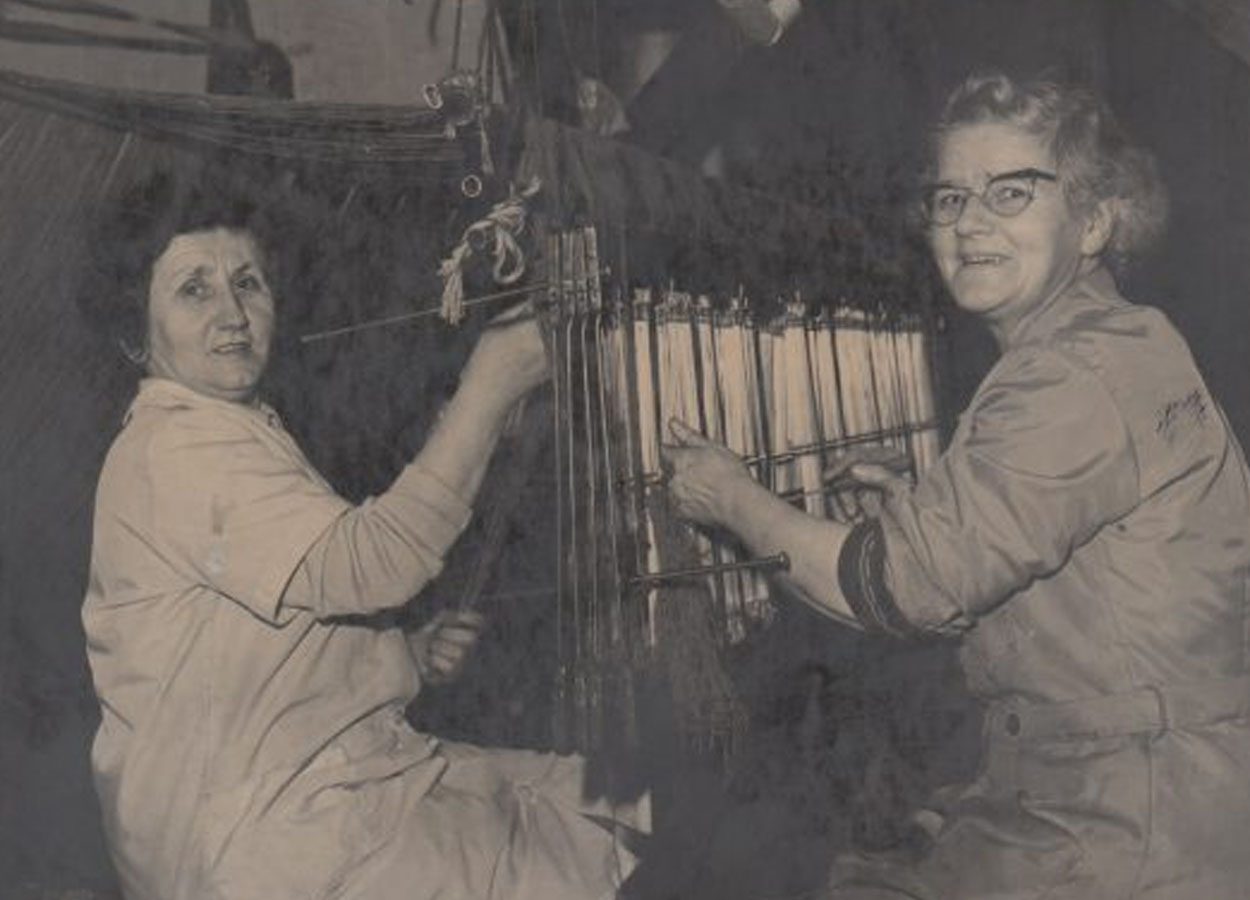
By the First World War, Holywell Textile Mill was a well-established manufacturer of woollen clothes. While many industries struggled during the war, some like the textile mill saw an opportunity by making soldier’s uniforms. Courtaulds was growing into an international company in the 1920s, making the new fashionable manmade fibres such as Rayon. By the 1960s it had built two new factories at Greenfield and employed thousands of local people. Abbey Paper Mill established in 1821, was another large employer and survived the other short lived industries of the 19th century, closing its doors in 1982.






Website Designed & Built by Daydream Designs